Online Learning Tips for Remote Students: 11 Strategies That Actually Work
Online learning requires different skills than in-person classes. Self-regulated learning, environmental design, and purposeful instructor interaction are the keys to staying engaged and getting good grades.
Online learning sounds simple: watch lectures at your own pace, submit assignments remotely, no commute. But it is actually much harder than in-person school. Students who thrive in online environments need different skills — self-discipline, active engagement, and strong time management.
The research is clear: online students score lower than in-person students at the same school — unless they develop specific strategies. This guide covers the exact system that successful remote students use.
1. Self-Regulated Learning (SRL) is Your Foundation
Self-regulated learning (SRL) is the #1 predictor of success in online classes. It means managing your own learning without a teacher pushing you — setting goals, monitoring progress, and adjusting strategies when something is not working.
The three pillars of SRL:
Metacognition (knowing what you know)
Before each lecture, ask: "What do I already know about this topic?" After learning, ask: "Can I explain this to someone else?" This self-awareness prevents false confidence.
Motivation management
In-person classes have external structure that keeps you motivated. Online, you must create that internally. Set weekly goals, reward progress, and remind yourself why you are taking the class.
Environmental structuring
Design your study space and schedule to minimize distractions and support focus. Tell family when you are studying. Use website blockers. Create routines that signal "study time."
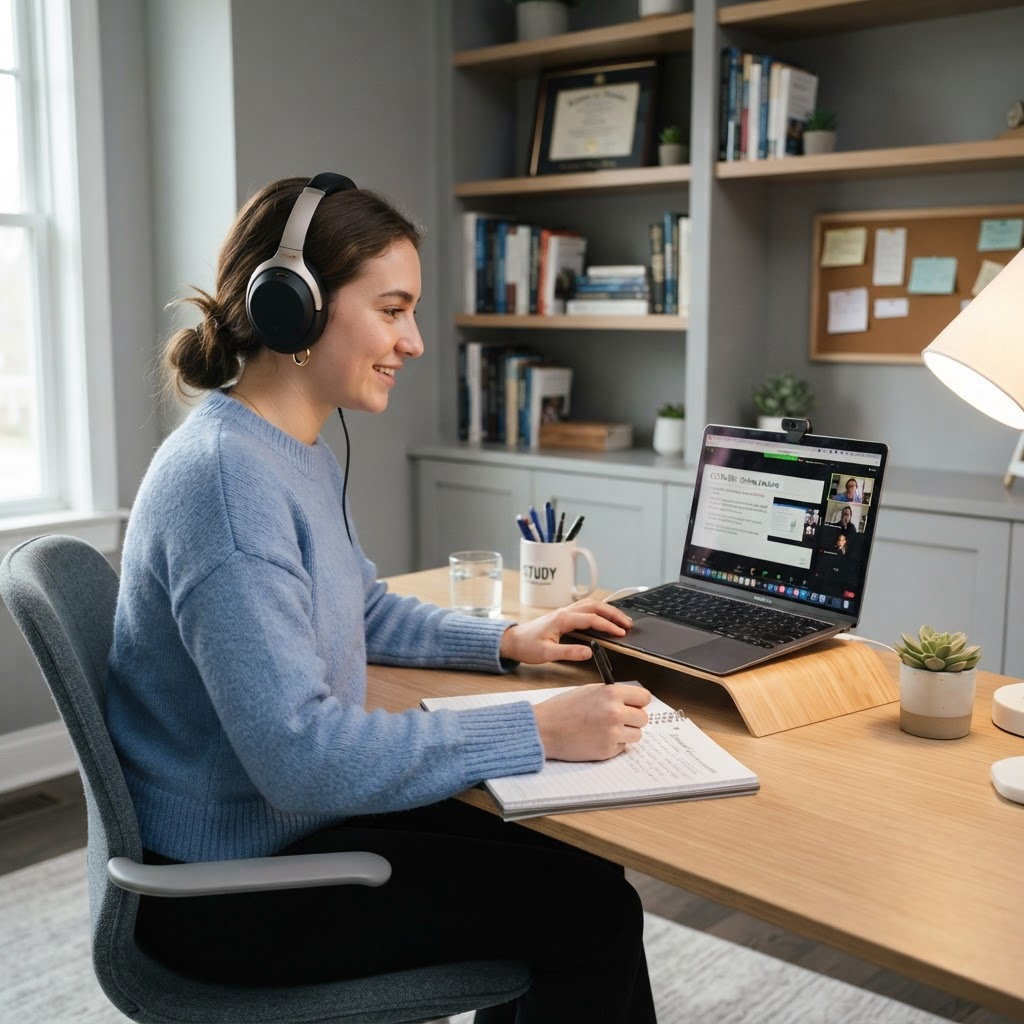
2. Optimize Your Study Environment
Your study environment directly impacts your focus, retention, and grades. Most online students study from bed or the couch — which is exactly why they struggle.
Your ideal study space:
- Desk (not bed): Your brain associates beds with sleep, not focus. Use a dedicated desk.
- Minimal visual clutter: Remove distracting objects. Keep only what you need for current task.
- Good lighting: Natural light is ideal. If impossible, get a desk lamp. Poor lighting causes headaches and fatigue.
- Comfortable temperature: Too hot = drowsy. Too cold = distracted. Aim for 68-72°F (20-22°C).
- Door closed: If possible, signal unavailability. Hang a "do not disturb" sign if needed.
- Phone out of sight: Do not just silence it — remove it from the room during focus sessions.
3. Time Management: The Make-or-Break Factor
Online students often fall behind because they think "I can watch this lecture anytime" becomes "I will watch it never." Without structure, procrastination spirals.
The time-blocking system: Schedule specific time slots for each class, just like in-person attendance.
Example weekly schedule:
Monday 7-9 PM: Watch Module 1 lecture + take notes
Wednesday 7-9 PM: Do quiz + read assigned reading
Saturday 10 AM-12 PM: Complete assignment draft
Sunday 3-5 PM: Review and polish assignment
This creates the same accountability as in-person class. You are not just "sometime studying" — you have a commitment.
Rule: Watch lectures within 24 hours of when they are released. Your brain is freshest early, and reviewing recorded lectures is more effective when memory is recent.
4. Build Community and Engage Actively
Isolation is the biggest threat to online student success. Students who feel disconnected from instructors and classmates are 2-3x more likely to drop out.
Active strategies to build connection:
- → Participate in discussion forums early and thoughtfully (instructors notice)
- → Attend live office hours or one-on-one meetings when offered
- → Form study groups with classmates (even virtual ones)
- → Ask questions in chat during live sessions
- → Email instructors with specific questions (not vague concerns)
5. Recommended Technology & Tools
You do not need expensive tech to succeed online, but a few tools make life significantly easier.
Notion or OneNote
Centralized note-taking and organization. Keep all course materials in one place, searchable and organized by topic.
Freedom or Cold Turkey
Website blockers that prevent distraction. Block social media during study blocks.
Forest or Focus Keeper
Pomodoro timer apps that gamify focus sessions. Grow virtual trees while you study.
Zoom or Teams
Master video conferencing basics. Test audio/video before class. Mute background noise.
Your Online Learning Success Plan
- →Build a dedicated study space that signals focus to your brain
- →Use time-blocking to create artificial accountability for asynchronous learning
- →Practice self-regulated learning: set goals, monitor progress, adjust strategies
- →Build community through active engagement with instructors and classmates
- →Watch lectures within 24 hours of release while memory is fresh